Fire Risk Assessments in Bute and Rothesay: What Dutyholders Need to Know
If you run a shop, hotel, café, holiday let, office, or any other non-domestic premises in Rothesay or elsewhere on the Isle of Bute, you almost certainly need a suitable and sufficient fire risk assessment. This is not optional guidance—it is a clear legal duty under Scottish fire safety law.
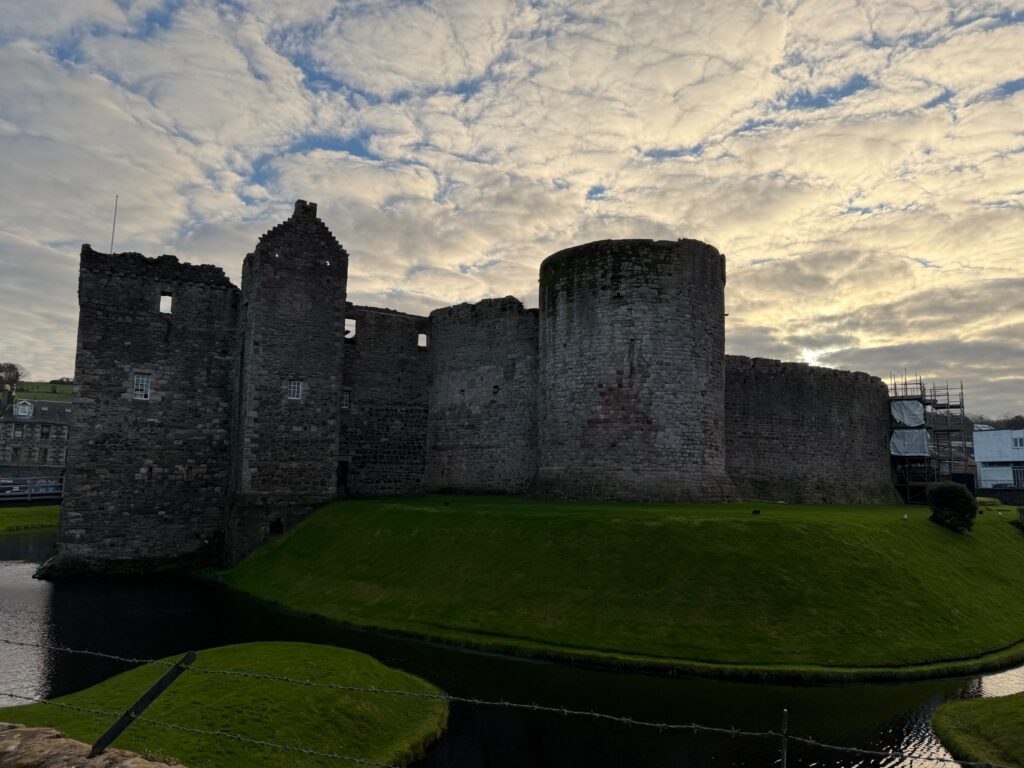
Rothesay, the main town on the Isle of Bute in the Argyll and Bute Council area, has a distinctive mix of Victorian and heritage buildings, waterfront properties, and tourism businesses. These characteristics create specific fire safety challenges that a generic mainland assessment often misses. The Scottish Fire and Rescue Service covers the island, and local premises must meet the same rigorous standards as anywhere else in Scotland.
This guide explains exactly what a fire risk assessment is, who needs one on the Isle of Bute, the correct legal framework, the official five-step process, and practical considerations unique to Rothesay and Bute. It is written for business owners, landlords, hoteliers, and short-term let operators who want to stay compliant and protect people.
What a Fire Risk Assessment Actually Is (and Why a Generic One Is Not Enough)
A fire safety risk assessment is a structured examination of your premises, the activities carried out there, the people who use them, and the potential for fire to start and cause harm. Its purpose is to identify hazards, evaluate risks to people, and determine whether existing fire safety measures are adequate or need improvement.
Official Scottish guidance is clear: the assessment must be specific to the premises and the people in them. A generic template or one-size-fits-all report is not sufficient. On the Isle of Bute this matters particularly because of older construction, shared escape routes in mixed-use buildings, high visitor numbers in tourist season, and the practical realities of island access for emergency services.
The Scottish Fire and Rescue Service sets out the core purpose clearly on its fire risk assessment guidance page. The goal is to reduce the risk of harm from fire to as low as reasonably practicable and ensure people can escape safely if a fire occurs.
Who Needs a Fire Risk Assessment on the Isle of Bute / in Rothesay
Under Part 3 of the Fire (Scotland) Act 2005, the duty falls on “dutyholders.” This typically includes:
- Employers
- Persons who have control of premises (for example, owners or managers)
- Occupiers of non-domestic premises
- Anyone who has contractual or other control over fire safety measures
Relevant premises include shops, offices, hotels, guest houses, restaurants, warehouses, places of assembly, and many short-term lets that provide sleeping accommodation. Purely private domestic dwellings occupied as a single household are generally outside the scope, but the moment premises are used for business or short-term letting, the duties often apply.
On Bute, this covers high-street businesses in Rothesay, waterfront hospitality, self-catering cottages, and larger hotels. Holiday-let operators must also meet Argyll and Bute Council’s short-term let licensing conditions, which include specific fire safety requirements. Details are available on the Argyll and Bute Council short-term lets licence page.
Scottish Legal Requirements: Fire (Scotland) Act 2005 and Regulations
Scotland operates under its own legislation. The correct framework is the Fire (Scotland) Act 2005 together with the Fire Safety (Scotland) Regulations 2006. These replaced earlier fire safety law and place clear duties on dutyholders to:
- Carry out a fire safety risk assessment
- Take general fire precautions
- Make and record arrangements for planning, organisation, control, monitoring, and review of fire safety measures
- Provide information and training where required
- Review the assessment regularly
The Regulations expand on recording requirements, duties relating to young persons and dangerous substances, maintenance, and cooperation between dutyholders sharing premises. Enforcement is carried out by the Scottish Fire and Rescue Service. Failure to comply can result in enforcement notices or, in serious cases, prosecution.
This is distinct from the Regulatory Reform (Fire Safety) Order 2005 that applies in England and Wales. Using English templates or guidance for Bute premises is a common and potentially costly mistake.
The Scottish Government’s Practical Fire Safety Guidance for existing non-residential premises provides the detailed benchmarks against which assessments are judged.
The 5 Steps of a Fire Safety Risk Assessment
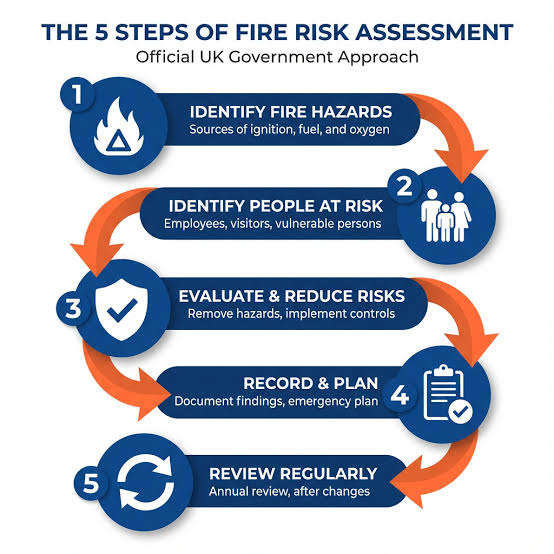
Official Scottish guidance and the Scottish Fire and Rescue Service describe a consistent five-step process:
- Identify people at risk
Consider employees, visitors, customers, contractors, and anyone sleeping on the premises. Pay special attention to people with disabilities, children, or those unfamiliar with the building (common with tourists on Bute). - Identify fire hazards
Look for sources of ignition, fuel, and oxygen. On older Rothesay buildings this may include electrical systems, open fires or solid-fuel appliances, cooking equipment, and stored materials. - Evaluate the risk and decide if existing fire safety measures are adequate
Assess the likelihood of fire and the potential consequences. Determine whether means of escape, detection, warning, and firefighting equipment are sufficient. Reduce risks where reasonably practicable. - Record fire safety risk assessment information
Recording is required in certain circumstances (for example, where five or more people are employed, or the premises are licensed). Even where not strictly required, a written record is strongly recommended. The Scottish Government provides a practical guide to carrying out and recording a fire safety risk assessment. - Review the fire safety risk assessment
Reviews must keep the assessment up to date. They are required after significant changes or at regular intervals.
These steps align directly with the process set out by the Scottish Fire and Rescue Service and in Scottish Government guidance.
Specific Considerations for Rothesay and Bute Premises
Island and historic-town conditions create distinctive issues:
- Older and heritage buildings: Many properties in Rothesay have traditional construction, complex layouts, limited compartmentation, and shared escape routes. Fire doors, protected routes, and detection coverage need careful evaluation.
- Tourism and high visitor numbers: Seasonal peaks mean large numbers of people unfamiliar with escape routes. Clear signage, simple procedures, and adequate escape capacity become critical.
- Holiday lets and short-term accommodation: Sleeping risk raises the standard required. Interlinked detection, suitable escape routes, and compliance with both fire safety law and short-term let licence conditions are essential. A dedicated holiday let fire risk assessment Bute approach is often needed.
- Shared or mixed-use buildings: Cooperation between different dutyholders is a legal requirement under the Regulations.
- Island logistics: Emergency response times can differ from mainland urban areas. Assessors and businesses should account for this in emergency planning. Choosing an assessor who regularly travels to Bute (rather than one who simply claims “Scotland-wide” coverage) improves practical relevance.
Waterfront and hillside properties can also face additional considerations around access and the impact of weather on escape routes or external features.
How Often the Assessment Must Be Reviewed
The Fire Safety (Scotland) Regulations 2006 require the assessment to be reviewed regularly so that it remains up to date. A review is also mandatory if:
- There is reason to suspect it is no longer valid
- There has been a significant change to the premises, processes, or occupancy
There is no fixed statutory interval for every premises, but many competent assessors and the enforcing authority expect a formal review at least annually, or more frequently where risk is higher (for example, sleeping accommodation or premises with significant public access). Any material change—renovation, change of use, or increase in occupancy—should trigger an immediate review.
Choosing a Competent Assessor
The law requires the assessment to be suitable and sufficient. Dutyholders are responsible for ensuring the person carrying it out is competent. The Scottish Government and Scottish Fire and Rescue Service recommend selecting assessors or companies that are third-party certificated by a UKAS-accredited certification body or registered with a recognised professional registration scheme.
Schemes such as BAFE SP205 (company certification for life safety fire risk assessments) provide independent verification of competence, processes, and quality control. Individual registers maintained by professional bodies offer another route. Competence is further supported by the framework in BS 8674:2025.
On the Isle of Bute, practical competence also includes experience with older Scottish buildings, tourism premises, and the realities of island travel and access. Ask for evidence of relevant qualifications, insurance, and examples of similar premises assessed.
What a Good Assessment Report Should Contain
A useful report typically includes:
- Description of the premises, occupancy, and activities
- Identification of people at risk
- Fire hazards identified and risk evaluation
- Assessment of existing measures (means of escape, detection and warning, emergency lighting, firefighting equipment, management arrangements)
- Significant findings and a prioritised action plan with timescales
- Emergency plan outline and training requirements
- Review date and arrangements
Clear, actionable recommendations are more valuable than lengthy generic text. The report should enable the dutyholder to demonstrate compliance to the Scottish Fire and Rescue Service if inspected.


Common Mistakes Businesses on Bute Make
- Relying on an English-law template or the Regulatory Reform (Fire Safety) Order 2005
- Using a generic assessment that ignores local building characteristics or tourism occupancy
- Failing to record findings even when required
- Not reviewing after changes or at reasonable intervals
- Assuming short-term let licensing alone satisfies the Fire (Scotland) Act duties
- Choosing an assessor who does not physically visit or lacks relevant experience with island or heritage premises
- Neglecting cooperation requirements in multi-occupied buildings
Avoiding these issues significantly reduces the chance of enforcement action and improves actual safety.
Fire Risk Assessment FAQs for Rothesay and the Isle of Bute
Do I need a fire risk assessment for a holiday let on Bute?
Yes, in most cases. Premises providing sleeping accommodation for short-term letting fall within the scope of the Fire (Scotland) Act 2005 duties. You must also satisfy Argyll and Bute Council’s short-term let licence fire safety conditions.
Is a fire risk assessment required for a small shop in Rothesay?
Yes. Non-domestic premises such as shops are relevant premises. The duty applies regardless of size, although recording requirements vary.
How often should I review the assessment?
Regularly, and after any significant change. Many dutyholders review annually as good practice. The Regulations require the assessment to be kept up to date.
Who enforces fire risk assessments on the Isle of Bute?
The Scottish Fire and Rescue Service.
Can I do the assessment myself?
Yes, if you are competent to do so. For more complex premises (older buildings, sleeping risk, public access), most dutyholders engage a competent third-party assessor.
What happens if I do not have a suitable assessment?
The Scottish Fire and Rescue Service can issue enforcement notices. Serious breaches can lead to prosecution.
Does the assessment cover only the building or also management arrangements?
Both. It covers physical measures and the management policies, procedures, training, and maintenance arrangements needed to keep people safe.
Are there special rules for older buildings in Rothesay?
The same law applies, but the assessment must take account of the specific construction, layout, and constraints of the building. Official guidance includes considerations for traditional buildings.
Next Steps for Premises on the Isle of Bute
If you operate premises in Rothesay or elsewhere on the Isle of Bute, confirm whether you are a dutyholder under the Fire (Scotland) Act 2005. Review any existing assessment against the five-step process and Scottish Government guidance. If the assessment is outdated, incomplete, or was prepared under English law, arrange a new one carried out by a competent person who understands local conditions.
Prioritise premises with sleeping accommodation, high visitor numbers, or complex older layouts. Keep records of the assessment, reviews, training, and maintenance so you can demonstrate compliance if the Scottish Fire and Rescue Service visits.
Taking these steps protects people, supports short-term let licensing where relevant, and reduces the risk of enforcement. Accurate, premises-specific fire risk assessments remain the foundation of fire safety compliance across the Isle of Bute.