Fire Door Inspection in Nottingham: What Responsible Persons Need to Know
If you manage commercial premises, an HMO, student accommodation, or a multi-occupied residential block in Nottingham, a professional fire door inspection is often essential for compliance and safety. Fire doors are a critical part of a building’s passive fire protection, yet many in Nottingham’s student housing and mixed-use stock are found with defects that could allow smoke and fire to spread more quickly.
Nottinghamshire Fire and Rescue Service (NFRS) is the enforcing authority for the city and county. With a large student population, high numbers of HMOs, and significant multi-occupied residential buildings, Regulation 10 duties under the Fire Safety (England) Regulations 2022 are particularly relevant here. This guide explains what a proper fire door inspection involves, the legal requirements, local considerations for Nottingham premises, and how to choose a competent inspector.
What a Professional Fire Door Inspection Involves (and Why a Basic Visual Check Is Not Enough)
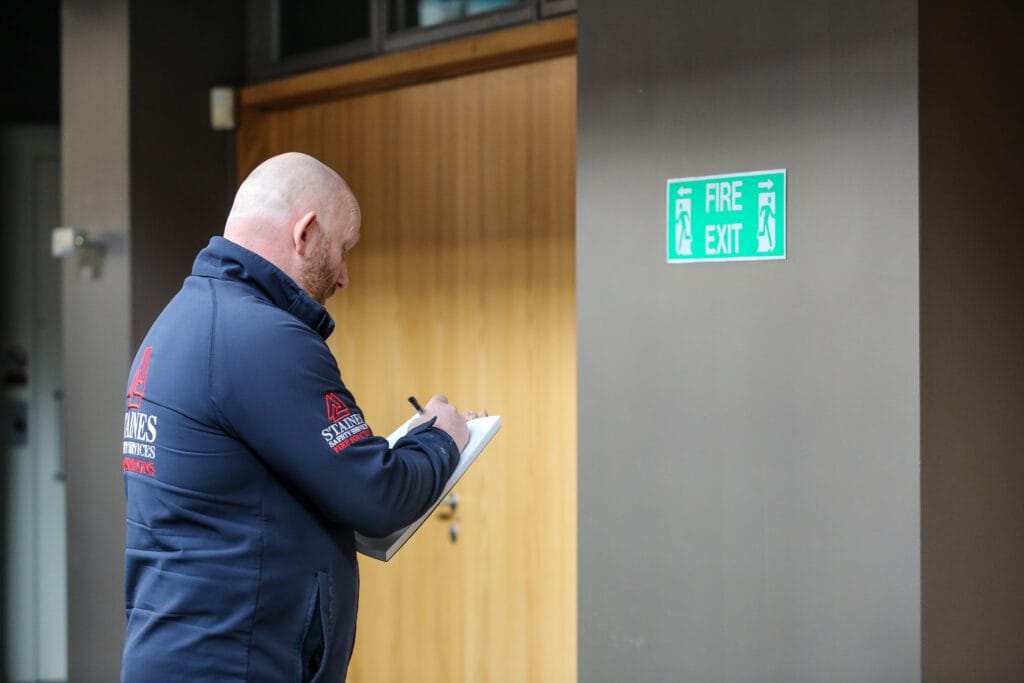
A professional fire door inspection is a systematic examination of each doorset to determine whether it is likely to perform as intended in a fire. It goes well beyond a quick visual glance.
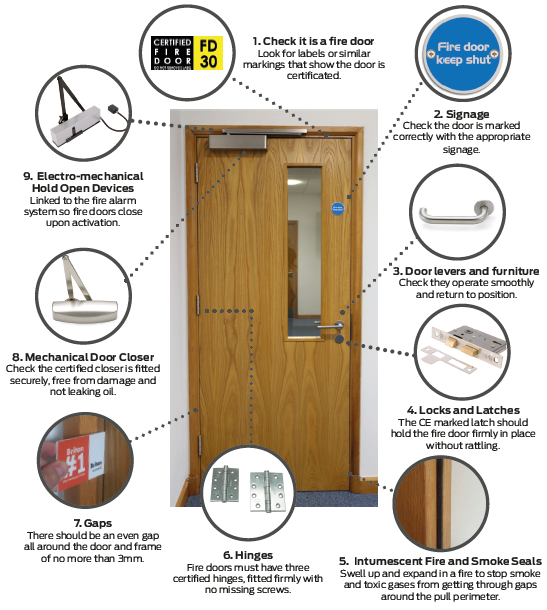
A competent inspector checks the entire assembly against the door’s certification (where available), BS 8214 guidance, and the expectations of the fire risk assessment. This includes measuring gaps, assessing seals, testing the closer, examining ironmongery, and reviewing the condition of the leaf and frame. Findings are recorded with clear recommendations and photographic evidence.
Routine visual checks by a Responsible Person or caretaker are useful for spotting obvious problems (a door that won’t close, a damaged seal, or a door wedged open). They are not a substitute for a detailed professional inspection, especially in higher-risk or multi-occupied buildings. Many defects that affect performance are not obvious without measurement and knowledge of certification requirements.
Who Needs Fire Door Inspections in Nottingham
The duty primarily falls on the Responsible Person under the Regulatory Reform (Fire Safety) Order 2005. In practice this includes:
- Landlords and managing agents of multi-occupied residential buildings
- HMO operators and student accommodation providers
- Facilities managers of commercial offices, retail, and mixed-use buildings
- Owners or managers of hotels, care premises, and places of assembly
- Anyone with control of the common parts or fire safety arrangements
In Nottingham, this covers a wide range of premises: purpose-built student blocks, converted Victorian houses used as HMOs, city-centre commercial buildings, and residential blocks subject to Regulation 10. HMO licensing conditions from Nottingham City Council often reinforce the need for proper fire door management.
English Legal Requirements: RRO 2005 and Regulation 10
The main legislation is the Regulatory Reform (Fire Safety) Order 2005. It requires the Responsible Person to carry out a suitable and sufficient fire risk assessment, implement general fire precautions, maintain them, and ensure people are adequately trained.
The Fire Safety Act 2021 clarified that flat entrance doors form part of the Order’s scope in multi-occupied residential buildings.
The Fire Safety (England) Regulations 2022 introduced more specific duties. Under Regulation 10:
- In all multi-occupied residential buildings with common parts, residents must be given information about the importance of fire doors.
- In buildings where the top storey is more than 11 metres above ground level, the Responsible Person must check communal fire doors at least every three months and use best endeavours to check flat entrance doors at least every 12 months.
Official guidance is available in the GOV.UK Fire Safety (England) Regulations 2022: fire doors guidance. Broader duties are summarised in the GOV.UK fire safety guidance collection for those with legal duties.
NFRS carries out risk-based audits and can request to see fire risk assessments, maintenance records, and evidence of fire door checks. Their guidance on what to expect from a fire safety audit sets out the documents and evidence inspectors typically review.
BS 8214:2026 is the current British Standard code of practice for the specification, installation, and performance in use of fire-resisting and smoke control doors. It is widely used as the practical benchmark during inspections.
Specific Considerations for Nottingham Premises
Nottingham’s building stock creates particular issues:
- Student HMOs and purpose-built student accommodation: High occupancy turnover, frequent door use, and licensing requirements mean fire doors often suffer from damage, disabled closers, or missing seals. Consistent professional inspections help maintain standards between tenancies.
- Multi-occupied residential blocks over 11 metres: Regulation 10 quarterly and annual check duties apply directly. Many blocks in and around the city fall into this category.
- City-centre commercial and mixed-use buildings: Older commercial premises and conversions can have complex layouts, shared escape routes, and varied door types.
- Heritage and converted properties: Traditional construction can make correct installation and gap tolerances more challenging.
Inspectors who regularly work across Nottingham portfolios understand these local patterns and can schedule efficiently for landlords managing multiple properties.
What a Competent Fire Door Inspection Should Check
A thorough inspection typically covers:
- Certification labels or evidence of fire performance (where present)
- Condition of the door leaf and frame (damage, warping, holes)
- Gaps around the perimeter (commonly recommended in the 2–4 mm range under BS 8214 guidance, subject to the specific doorset’s certification)
- Intumescent and smoke seals (presence, condition, and correct fit)
- Self-closing device (operation, closing speed, and latching)
- Hinges, locks, and ironmongery (correct type and condition)
- Glazing and any vision panels
- Signage where required
- Overall ability of the doorset to close fully and remain closed
Basic vs professional inspection comparison
| Aspect | Routine Responsible Person check | Professional fire door inspection |
|---|---|---|
| Depth | Visual only | Measured gaps, seals, certification review |
| Who carries it out | Caretaker, manager, or staff | Competent inspector |
| Records | Simple log | Detailed report with photos and actions |
| Frequency | Often monthly or quarterly | Typically 6- or 12-monthly (risk-based) |
| Purpose | Spot obvious problems | Confirm performance and support compliance |
How Often Inspections Are Required or Recommended
Regulation 10 sets minimum intervals for residential buildings over 11 metres (quarterly communal, annual flat entrance on a best-endeavours basis). These are checks, not necessarily full professional inspections.
For other premises, the fire risk assessment determines the frequency. Many Responsible Persons and insurers expect professional inspections at least every 6 or 12 months, with more frequent checks in high-traffic or higher-risk settings such as student HMOs. Any significant damage or change should trigger an earlier inspection.
Choosing a Competent Fire Door Inspector in Nottingham
Competence matters. Look for inspectors who:
- Understand BS 8214 and the relevant legislation
- Can produce clear, door-by-door reports with photographic evidence
- Have experience with the types of premises common in Nottingham (HMOs, student blocks, commercial)
- Explain the difference between routine checks and professional inspections
- Provide prioritised recommendations rather than generic advice
Third-party recognition (such as relevant qualifications or scheme membership) is useful evidence of competence but is not a legal requirement in itself. Ask for examples of similar work and confirm insurance.


What a Good Inspection Report Should Contain
A useful report typically includes:
- Premises and door identification details
- Summary of findings and overall compliance status
- Door-by-door results with measurements, photographs, and defect descriptions
- Prioritised action plan with recommended timescales
- Reference to relevant standards and legal context
- Clear distinction between items that can be addressed by routine maintenance and those needing specialist repair or replacement
The report should help the Responsible Person demonstrate compliance to NFRS or a licensing authority if required.
Common Mistakes Businesses and Landlords in Nottingham Make
- Relying only on basic visual checks without periodic professional inspection
- Ignoring Regulation 10 duties in residential blocks over 11 metres
- Failing to keep records of checks and remedial work
- Using non-competent persons for formal inspections
- Not addressing common student-housing issues (damaged seals, disabled closers, excessive gaps)
- Assuming a one-off inspection removes the need for ongoing management
- Choosing the lowest-price option without checking competence or report quality
Fire Door Inspection FAQs for Nottingham
Is a fire door inspection legally required in Nottingham?
The Fire Safety Order requires fire doors to be maintained so they remain effective. Regulation 10 adds specific check duties for multi-occupied residential buildings. Professional inspections are the practical way most Responsible Persons demonstrate compliance, especially where the fire risk assessment requires them.
How often should fire doors be inspected in an HMO in Nottingham?
The fire risk assessment and any HMO licence conditions set the frequency. Many operators arrange professional inspections at least annually, with more frequent routine checks.
What is the difference between a Regulation 10 check and a full inspection?
Regulation 10 checks are the minimum routine checks required for certain residential buildings. A professional inspection is a more detailed assessment against standards and certification, usually carried out by a competent specialist.
Who enforces fire door requirements in Nottingham?
Nottinghamshire Fire and Rescue Service.
Do student accommodation providers need professional inspections?
Yes, in most cases. High occupancy and turnover make regular competent inspections particularly important for maintaining standards.
What should I look for in an inspection report?
Clear door-by-door findings, photographic evidence, measured gaps where relevant, prioritised actions, and enough detail to support compliance records.
Does BS 8214 apply to inspections in Nottingham?
Yes. BS 8214 is the recognised code of practice used as a benchmark for fire door specification, installation, and performance in use across England.
Next Steps for Premises in Nottingham
If you manage premises in Nottingham, review your fire risk assessment to confirm what level of fire door inspection and checking is required. Identify which buildings fall under Regulation 10 and ensure both the minimum checks and any recommended professional inspections are in place.
Keep clear records of inspections, routine checks, and remedial work. These are frequently requested during NFRS audits or HMO licensing processes.
For a competent professional fire door inspection that takes account of local building types and occupancy patterns, engage an inspector with relevant experience in Nottingham and Nottinghamshire. A good inspection provides the evidence and action plan needed to keep fire doors effective and support ongoing compliance.