Cheap Fire Door Courses: A Practical Guide to Affordable Fire Door Awareness Training
If you are searching for cheap fire door courses, you are usually looking for clear, practical awareness-level training rather than a full professional inspector qualification. Responsible Persons, facilities managers, property managers, landlords, and maintenance teams need to understand how fire doors work, what common defects look like, and what the law expects them to do.
Fire doors are critical passive fire protection. When they fail, smoke and fire can spread far more quickly through a building. Since the introduction of the Fire Safety (England) Regulations 2022, many Responsible Persons also have specific duties around routine fire door checks and resident information. Affordable, well-designed Cheap fire door course/ awareness training helps people meet those duties without unnecessary cost or complexity.
This guide explains what good fire door awareness training covers, the legal context, how to choose a worthwhile low-cost option, and where an online free trial can fit as a convenient starting point.
What a Fire Door Awareness Course Actually Covers (and Who It Is For)
A fire door awareness course is designed for people who need a solid working understanding of fire doors but are not aiming to become third-party certified inspectors. Typical audiences include:
- Responsible Persons and duty holders under the Regulatory Reform (Fire Safety) Order 2005
- Facilities and property managers
- Maintenance staff and caretakers
- Fire wardens and fire marshals
- Landlords and managing agents of residential blocks
- Small business owners who need basic staff awareness
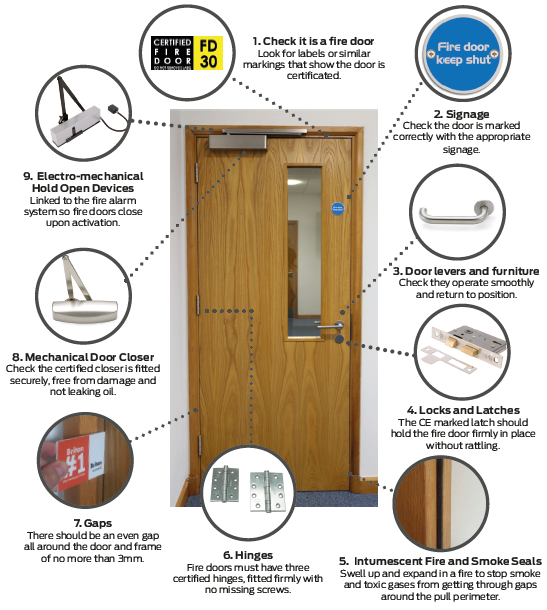
Good awareness-level training usually covers the role of fire doors in compartmentation, key components (seals, hinges, closers, frames), common defects, basic visual checks, record-keeping, and the legal duties that apply. It focuses on recognising problems and knowing when to escalate them to a competent specialist rather than teaching full diagnostic inspection techniques.
It is not a substitute for specialist fire door inspection qualifications or third-party certification schemes. Awareness training supports the Responsible Person’s overall duty to ensure people are adequately trained and that fire doors are properly managed.
Why Cheap or Affordable Fire Door Training Matters
Many organisations need to train multiple people across a portfolio. Full professional inspection courses are valuable for those whose job is detailed surveying, but they are often more expensive and more detailed than what a facilities manager or caretaker needs for day-to-day awareness and basic checks.
Affordable options allow Responsible Persons to:
- Meet the general duty to provide adequate training under the Regulatory Reform (Fire Safety) Order 2005
- Support compliance with Regulation 10 of the Fire Safety (England) Regulations 2022
- Reduce the number of common, easily spotted defects (wedged-open doors, damaged seals, missing closers)
- Improve the quality of routine checks and the records that sit behind them
Real-world risk remains high. Studies and industry observations continue to show that a large proportion of fire doors in existing buildings have defects that could affect performance. Low-cost awareness training is one practical way to address that at scale.
Key UK Legal Requirements for Fire Doors
The main framework in England and Wales is the Regulatory Reform (Fire Safety) Order 2005. It requires the Responsible Person to carry out a suitable and sufficient fire risk assessment, put general fire precautions in place, maintain them, and ensure employees receive adequate training.
The Fire Safety Act 2021 clarified that the structure, external walls, and flat entrance doors fall within the scope of the Order for multi-occupied residential buildings.
The Fire Safety (England) Regulations 2022 added more specific duties. Under Regulation 10:
- In all multi-occupied residential buildings with common parts, the Responsible Person must give residents information about the importance of fire doors (kept shut, not tampered with, faults reported).
- In buildings where the top storey is more than 11 metres above ground level, the Responsible Person must also carry out (or arrange) quarterly checks of communal fire doors and use best endeavours to check flat entrance doors at least every 12 months.
Official guidance on these duties is available in the GOV.UK Fire Safety (England) Regulations 2022: fire doors guidance. Broader responsibilities are summarised in the GOV.UK fire safety guidance collection for those with legal duties.
BS 8214 (current edition 2026) provides the practical code of practice for the specification, design, installation, and performance in use of fire-resisting and smoke control doors. It is widely used as a benchmark by Responsible Persons, building control, and fire and rescue services.
What Good Awareness-Level Training Should Include
A worthwhile cheap fire door awareness course should cover, at a practical level:
- The purpose of fire doors and compartmentation
- Main components: leaf, frame, intumescent and smoke seals, hinges, self-closing devices, glazing, and ironmongery
- Common defects that reduce performance (gaps that are too large, damaged or missing seals, closer not working, doors wedged open, damage to the leaf or frame)
- Basic visual checks suitable for routine monitoring
- The importance of correct installation and why modifications can invalidate certification
- Record-keeping expectations under Regulation 10 and the Fire Safety Order
- When to escalate a door to a competent specialist for full inspection or repair
It should also explain the difference between a simple routine check and a detailed professional inspection.
Simple comparison
| Aspect | Awareness course | Full inspection qualification |
|---|---|---|
| Primary purpose | Understanding and basic checks | Detailed surveying and reporting |
| Typical audience | Managers, caretakers, Responsible Persons | Specialist inspectors |
| Depth | Components, common defects, duties | Certification, tolerances, testing |
| Legal role | Supports training and routine checks | Supports competent specialist work |
| Typical cost | Lower / online options available | Higher |
Differences Between Awareness Courses and Full Inspection Qualifications
Awareness training helps people recognise obvious problems and understand why fire doors matter. Full inspection or installation qualifications (often mapped to schemes such as FireQual or third-party certification routes) go much further into certification evidence, detailed measurement, defect classification, and reporting standards.
Responsible Persons should use awareness training for broad staff competence and routine monitoring. They should still engage competent, appropriately qualified or certified specialists for formal inspections where the fire risk assessment requires them, particularly in higher-risk or residential buildings over 11 metres.
Benefits of Online and Low-Cost Options
Online fire door awareness courses suit busy teams because they can be completed flexibly, without travel costs or large group bookings. For organisations that need to train multiple people, low-cost options make it realistic to give everyone a consistent baseline of knowledge.
A free trial is a low-barrier way to check whether a particular course matches your needs before committing. One such online fire door awareness option with a free trial is available here: https://videotilehost.com/stainessafetyservices/freeTrial.php?trial=223. It can serve as a practical starting point for Responsible Persons and staff who want accessible awareness training.
How to Choose a Worthwhile Cheap Fire Door Course
Look for:
- Clear coverage of the topics listed above
- Accurate treatment of the Fire Safety Order and Regulation 10
- Plain-language explanations of components and common defects
- A focus on practical outcomes (better checks, clearer records)
- Transparent information about what the course does and does not certify
- Evidence of recent content updates that reflect current guidance
Avoid courses that claim to turn someone into a fully qualified fire door inspector after only a short awareness module.
Common Mistakes People Make with Fire Doors and Training
- Treating every door as a fire door without evidence of certification
- Wedging fire doors open or disabling closers
- Ignoring damaged seals or excessive gaps
- Assuming a one-off inspection removes the need for ongoing checks and training
- Using only awareness training when the risk assessment requires specialist inspection
- Failing to keep simple records of routine checks (especially relevant under Regulation 10)
- Choosing the cheapest option without checking that the content is accurate and up to date
Fire Door Awareness FAQs
Do I legally need a fire door awareness course?
There is no single named course that is mandatory for every person. However, the Responsible Person must ensure employees receive adequate training under the Regulatory Reform (Fire Safety) Order 2005. Awareness training is a practical way to meet that duty for people who interact with or check fire doors.
What does Regulation 10 require?
In multi-occupied residential buildings, residents must receive information about fire doors. In buildings over 11 metres, communal fire doors must be checked at least quarterly and best endeavours used for annual checks of flat entrance doors. Official details are in the GOV.UK fire door guidance.
Is an online course enough?
For awareness and basic routine checks, a good online course can be sufficient for many staff. Formal professional inspections should still be carried out by competent specialists where required.
How often should fire doors be checked?
For residential buildings over 11 m, Regulation 10 sets minimum intervals. Elsewhere, the frequency is determined by the fire risk assessment. Many organisations adopt six-monthly or more frequent checks for higher-risk settings.
What is the difference between a check and an inspection?
A routine check is usually a visual look at key items (closer, seals, obvious damage). A full inspection is a more detailed, systematic assessment, often against certification and BS 8214 guidance, carried out by a competent person.
Does BS 8214 apply?
BS 8214 is a code of practice, not law. It is the widely recognised practical guidance for specification, installation, and performance in use of fire-resisting doors.
Can cheap training still be useful?
Yes, provided the content is accurate, covers the essential topics, and is kept up to date. Price alone does not determine quality.
Where can I find official guidance?
Start with the GOV.UK pages on the Fire Safety (England) Regulations 2022 fire door duties and the broader fire safety guidance collection for Responsible Persons.
Next Steps
Review your fire risk assessment to confirm what level of fire door management and training is required for your premises. Identify who needs awareness-level knowledge (managers, caretakers, wardens, staff) and who needs specialist inspection competence.
For a convenient, low-cost starting point, many Responsible Persons begin with an online fire door awareness course.
A free trial is available at https://videotilehost.com/stainessafetyservices/freeTrial.php?trial=223, allowing you to assess the content before deciding whether it meets your needs.
Combine awareness training with clear procedures for routine checks, simple record-keeping, and escalation of defects. That combination supports both legal compliance and better real-world fire safety.